Loan overpayment
Repayment simulation: snowball, avalanche and the rest.
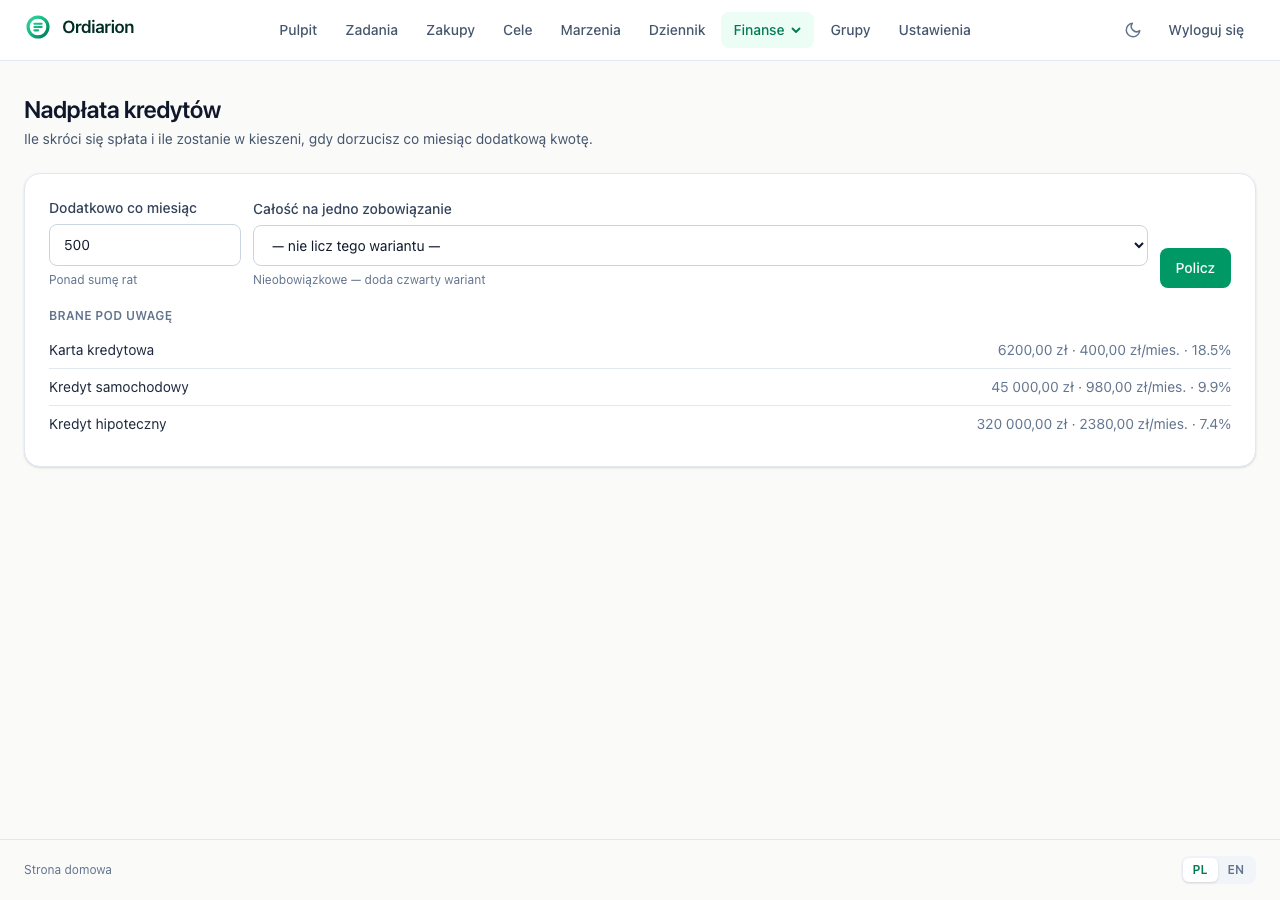
You enter the amount you can add each month and see how much sooner you would be free, and how much stays in your pocket.
Four methods side by side
- Avalanche — highest interest rate first. Always the cheapest.
- Snowball — smallest balance first. More expensive, but the first debt closes sooner.
- Proportional — the surplus split according to the size of each balance.
- One debt — everything onto the debt you choose.
All four are worked out at once and shown side by side. That is the point of this tool: the gap between methods is sometimes trivial and sometimes huge, and only once you can see it can you judge whether the cheaper but harder-to-stick-with option is worth it.
The snowball effect
The payment on a debt you have closed does not leave your budget — it joins the surplus and speeds up the next one. The simulation accounts for that in every variant.
A warning when payments do not cover interest
If any debt has a payment lower than the interest accruing on it, the balance grows despite being paid. The calculator says so outright above the results, because without that the numbers below would not be true.
Shorter term or lower payment
The calculator simulates overpayment that shortens the term — the cheaper of the two. We write about the difference between that and reducing the payment in Overpaying a loan: shorter term or lower payment?.